
Climate resilience is becoming an increasingly common expression in discussions about climate change. We hear about resilient communities, resilient ecosystems and resilient economies. But what does it mean to be resilient to climate change?
Imagine two agricultural regions facing the same drought period. Both experience higher temperatures and less rainfall. Yet, while one suffers severe crop losses and takes years to recover, the other manages to maintain its production and quickly adapt its practices. Both regions experienced the same climate hazard. But were they equally vulnerable? And, more importantly, were they equally resilient?
Answering these questions is becoming increasingly important. As climate risks grow across Europe, understanding and measuring resilience can help us to identify where action is most needed and whether adaptation measures are actually making a difference.
Resilience is more than surviving a climate event
Resilience goes beyond simply avoiding damage from climate events. It refers to the capacity of social, economic and ecological systems to deal with hazardous events or changing conditions while maintaining their essential functions. It also involves the capacity to adapt, learn and, when necessary, transform the systems themselves in response to changing conditions, as described in the IPCC Sixth Assessment Report.
For example, a forest may resist drought without significant damage, a farm may adapt by changing crops or water-management practices, and a coastal community may recover economically after changes in marine conditions.
Resilience therefore depends not only on the intensity of a climate hazard, but also on the characteristics of the system experiencing it. This is where another important concept comes into play: adaptive capacity, which is defined as the ability of systems, institutions, people and other organisms to adjust to potential damage, take advantage of opportunities or respond to consequences, according to the IPCC’s definitions and terminology.
In simple terms, two places exposed to the same climate risk may experience very different impacts because of differences in capacities to respond.
What makes one place more resilient than another?
Climate resilience is influenced by a combination of environmental, social and economic factors. Consider a drought event. The amount of rainfall is obviously important, but it is only a piece in the puzzle. The consequences of drought can also depend on soil properties, water availability, vegetation, agricultural practices, infrastructure and access to resources.
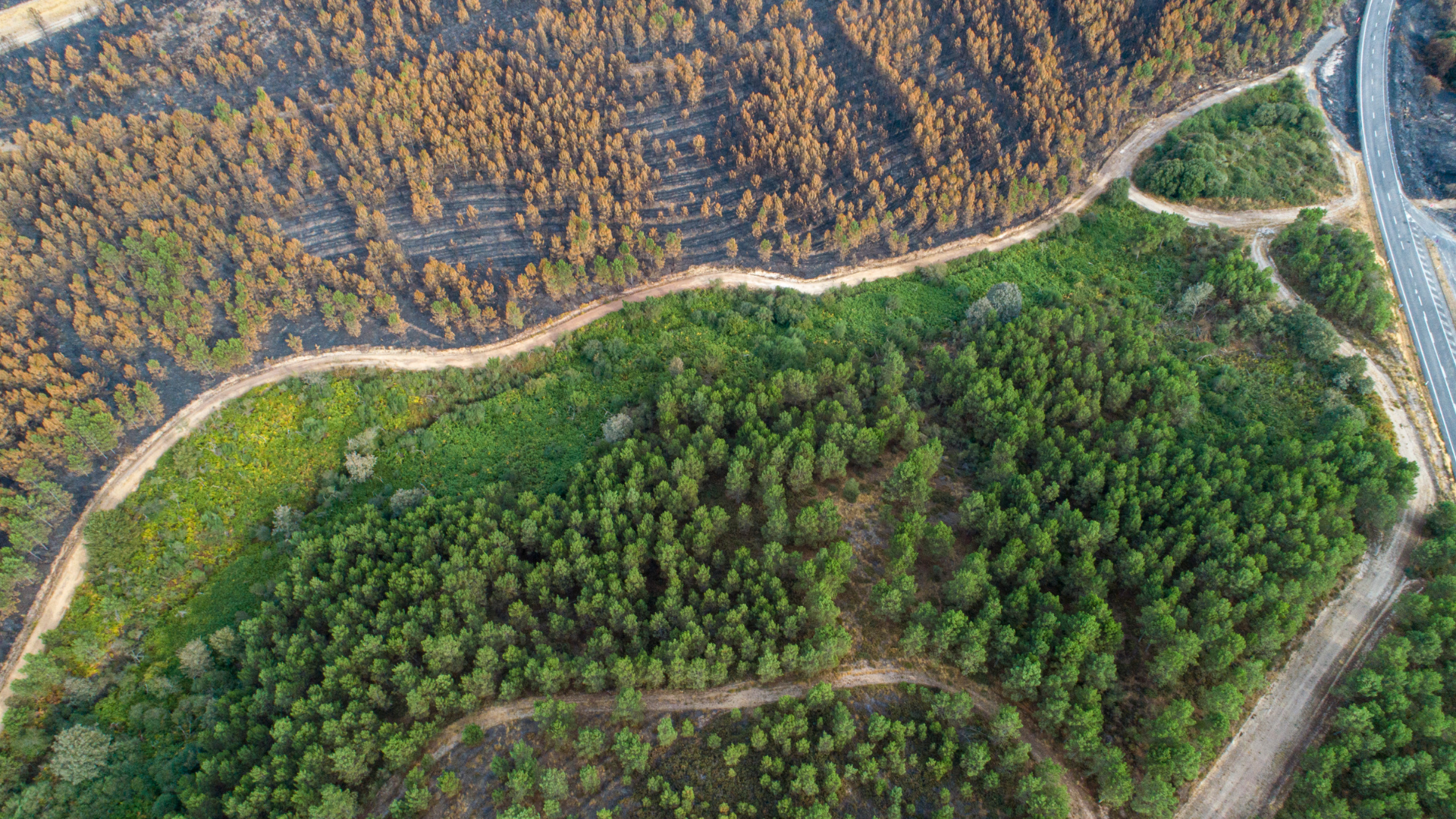
The same principle applies to forests, in which a period of high temperatures and low rainfall can affect trees differently depending on species composition, soil conditions, water availability and forest structure. Also in coastal areas, changes in temperature or marine ecosystems can affect fisheries differently depending on the species present, fishing practices, economic diversification and the ability of communities to adapt.
This means that measuring climate resilience requires looking beyond climate data alone. Researchers and decision-makers increasingly combine information about climate hazards (heatwaves, droughts, floods and changing temperatures), exposure (people, ecosystems, infrastructure or economic activities located in areas affected by those hazards), vulnerability (how susceptible a system is to be negatively affected) and adaptive capacity (ability to adjust and respond to changing conditions). Together, these elements provide a much more complete picture of climate risk and resilience, as reflected in the resources available through the European Climate-ADAPT platform.

Can resilience really be reduced to a simple number?
There is no single universal “climate resilience score” that can be applied equally to every region, ecosystem or economic sector. Instead, scientists use indicators to capture different dimensions of resilience, which depends on the system being studied and the climate risks.
Agriculture faces changes in crop productivity, soil moisture or water availability, while forests are guided by vegetation, tree growth or ecosystem characteristics. They all provide information about how ecosystems respond to environmental stress. Socioeconomic indicators can also be important, such as economic diversification, access to resources or the capacity of communities to implement adaptation measures. These different approaches are reflected in Climate-ADAPT’s resources on measuring progress towards climate resilience.
This is also why climate resilience can be difficult to compare between territories, where an indicator that is highly relevant for an agricultural region may be much less useful for a coastal fishing community. Rather than searching for one perfect measurement, the goal is to combine different pieces of evidence to understand how a system responds to climate pressures.
Measuring resilience means looking at change over time
Resilience is not static. A region that is well prepared today may become more vulnerable in the future as climate conditions change. In contrast, successful adaptation measures can strengthen its capacity to cope with future impacts. This makes monitoring essential.
Imagine that a region introduces a new measure to reduce the impacts of drought. Simply implementing it does not tell us whether it has worked. By comparing conditions before and after implementation — such as crop losses, soil water retention, production levels and recovery times — we can assess whether the measure actually reduces vulnerability, while also identifying unexpected environmental or economic effects.
This is increasingly important in Europe, where the European Environment Agency has highlighted gaps in monitoring, evaluation and learning, as well as the need for shared methodologies and metrics to track progress on climate resilience in its publication From Adaptation Planning to Action.
Baseline → Climate pressure → Response → Recovery → Adaptation
From data to decisions
Measuring climate resilience is therefore not simply an academic exercise. Better information can help to answer practical questions: Which risks should be prioritised? Which communities are most vulnerable? Where should resources be directed? Which adaptation measures are working? And which approaches could potentially be applied elsewhere?
To answer these questions, knowledge from different disciplines needs to come together. Climate and environmental datasets can reveal changing conditions. Geospatial analysis can show where risks and vulnerabilities overlap. Socioeconomic information can help explain why different communities experience the same hazard differently. Local knowledge can add another layer of understanding by capturing changes and challenges that may not be immediately visible in datasets. The combination of these perspectives can turn climate information into something more useful: evidence that supports decisions.
This approach is closely connected to the work of FARCLIMATE, which investigates climate risks and adaptation solutions through Case Studies across European territories. By combining scientific knowledge with local stakeholder engagement, the project contributes to a better understanding of the challenges facing agriculture, forestry and fisheries. At European level, the EU Mission on Adaptation to Climate Change and its implementation platform, MIP4Adapt, support regions in strengthening their adaptation processes, including monitoring, evaluation and learning.
From measuring resilience to building it
Understanding and measuring climate resilience is ultimately about supporting effective action.
The purpose is not to produce more indicators for their own sake, but to improve our ability to anticipate risks, choose appropriate adaptation measures and learn from their results. There will not be a single solution that makes every European region resilient to climate change. Different territories face different hazards, have different vulnerabilities and possess different capacities to adapt.
What can be shared, however, is knowledge: how risks were identified, which factors increased vulnerability, which measures were tested, what worked, what did not, and under which conditions.
This is where measuring resilience becomes part of a continuous process:
Understand → Measure → Act → Monitor → Learn → Adapt
As climate risks continue to evolve, this cycle will become increasingly important for European communities, ecosystems and economic sectors. Climate resilience may be complex, but that does not mean it has to remain an abstract concept. By combining data, scientific knowledge and local experience, we can better understand where vulnerabilities lie, track how systems respond to change and build evidence for more effective adaptation.
Discover the FARCLIMATE Case Studies and explore how different European territories are investigating climate risks, assessing vulnerabilities and developing adaptation solutions for more resilient agriculture, forestry and fisheries.
Author: Miguel Ángel Álvarez Sánchez