
Climate change is a global challenge, but its consequences are experienced locally. A drought affecting agricultural production, a wildfire threatening a rural community or changing marine conditions disrupting fisheries may all be linked to a changing climate, yet each requires a response adapted to the territory where it occurs.
This is why local climate adaptation is becoming increasingly important across Europe. Building resilience means understanding not only climate hazards, but also the environmental, economic and social characteristics that determine how each region experiences them.
Europe has already made considerable progress in developing adaptation policies. However, recent European assessments continue to highlight the need to accelerate their implementation. The challenge is therefore shifting from understanding climate risks and preparing strategies towards putting solutions into practice.
Through initiatives such as the EU Mission on Adaptation to Climate Change, its implementation platform MIP4Adapt, and Mission-funded projects such as FARCLIMATE, regions and communities are gaining new opportunities to turn climate knowledge into action.
Why Local Climate Adaptation Matters More Than Ever
Climate risks do not affect every European territory in the same way. Coastal communities, agricultural regions, forests, cities and remote rural areas have different vulnerabilities, resources and capacities to respond.
Consequently, adaptation cannot rely exclusively on one-size-fits-all solutions.
Effective local climate adaptation begins by understanding how climate hazards interact with the characteristics of a particular territory. This includes its ecosystems and economic activities, but also infrastructure, governance structures, available resources and the people whose livelihoods depend on them.
Recent work from the European Environment Agency (EEA) reinforces the importance of this territorial dimension. Its analysis of adaptation examples across Europe highlights implemented measures at different governance levels and shows how practical experiences can support peer-to-peer learning. At the same time, the EEA stresses that the pace and scale of adaptation still need to increase as Europe remains insufficiently prepared for growing climate risks.
Local action therefore does not mean addressing climate change in isolation. Instead, it allows wider European objectives to respond to the realities of individual communities.
Local Climate Adaptation Must Move from Planning to Action
Developing an adaptation strategy is an essential first step. Yet resilience ultimately depends on what happens after the strategy has been written.
This transition from planning to implementation is one of Europe’s major adaptation challenges.
Local and regional authorities must identify suitable measures, mobilise funding, engage stakeholders, coordinate different governance levels and evaluate whether implemented solutions actually reduce vulnerability. Smaller municipalities may face particular difficulties because financial resources, specialised expertise, data and administrative capacity can be limited.
A recent EEA assessment highlights this challenge. More than 40% of Europe’s population lives in municipalities with fewer than 20,000 inhabitants, yet only 16% of smaller municipalities covered by the analysis had adaptation action plans, compared with 28% of larger municipalities.
These differences demonstrate why building climate resilience involves more than producing scientific knowledge. Communities also need access to capacity, networks, practical tools and opportunities to learn from solutions already being implemented elsewhere.
This is where European cooperation becomes particularly important.
The EU Mission Is Accelerating Local Climate Adaptation
The EU Mission on Adaptation to Climate Change provides a framework for helping European regions, cities and local authorities strengthen their resilience and move towards implementation.
This effort is increasingly extensive. According to the Mission’s 2025/2026 Activity Report, more than 400 regional and local authorities are now involved in Mission activities and initiatives. The ecosystem also includes 65 Horizon Europe projects and a Mission Adaptation Community with more than 700 participants exchanging knowledge and experiences.
These numbers illustrate an important evolution in European adaptation policy. The emphasis is increasingly moving from establishing frameworks towards deploying concrete solutions on the ground.
The Mission connects regions, researchers, policymakers, citizens and EU institutions around this objective. Rather than treating individual adaptation initiatives as isolated experiences, this approach creates opportunities for lessons generated in one territory to inform decisions elsewhere.
The latest Mission Barometer confirms this direction, highlighting continued progress in supporting regional and local authorities, strengthening adaptation capacity and advancing action on the ground.
For local climate adaptation, this European network is particularly valuable. Local solutions remain rooted in their specific territories, while the knowledge generated through them becomes part of a much broader learning process.
MIP4Adapt: Connecting Knowledge, Regions and Climate Action
Supporting hundreds of territories requires more than a common ambition. Regions and local authorities also need practical mechanisms that help them navigate adaptation.
This is where the Mission Implementation Platform for Adaptation to Climate Change (MIP4Adapt) plays a central role.
MIP4Adapt acts as a hub supporting European regional and local authorities as they develop their pathways towards climate resilience. It brings together the Mission Adaptation Community, showcases knowledge generated by EU-funded Mission Projects and provides guidance, tools, data and information through the Mission Portal. It also offers tailored support in areas such as funding, financing and stakeholder engagement.
Its first phase already demonstrated the potential of this approach. By the end of 2025, more than 160 regions and local authorities had received tailored support, while more than 125 adaptation plans had been advanced or completed with MIP4Adapt support.
Importantly, MIP4Adapt also creates opportunities to share experiences. This helps transform individual adaptation initiatives into knowledge that other European territories can discover, assess and potentially adapt to their own circumstances.
Local Climate Adaptation Starts with People
Climate adaptation is ultimately implemented by people.
Farmers understand changes affecting their crops and soils. Fishers observe transformations in marine environments. Forest managers experience changing fire, drought and ecosystem conditions. Local authorities understand infrastructure and governance constraints, while communities can identify vulnerabilities that may not immediately appear in scientific datasets.
This knowledge should complement scientific evidence.
Stakeholder and citizen engagement can therefore improve the relevance, effectiveness and credibility of adaptation plans. MIP4Adapt’s 2026 guidance specifically identifies communication, engagement, connection and enabling action as important components of participatory climate adaptation.
This principle is also central to approaches such as Living Labs, where different actors can collaborate in real-life environments to explore challenges, co-create ideas and assess potential solutions.
Participation does not mean replacing scientific expertise with local opinion. Instead, it creates a space where different forms of knowledge can interact.
For local climate adaptation, that distinction matters. A technically effective solution may still be difficult to implement if it overlooks local priorities, economic realities or the people expected to adopt it.
FARCLIMATE: Testing Adaptation in Real-World Contexts
FARCLIMATE contributes to this wider European adaptation ecosystem by working with territories and stakeholders across agriculture, forestry and fisheries.
Through its Case Studies and Living Lab approach, the project explores how climate adaptation can respond to different environmental and socio-economic realities. Rather than considering territories simply as locations where predetermined solutions are deployed, the project promotes collaboration between researchers, practitioners, communities and other relevant actors.
This approach allows climate challenges to be considered in context.
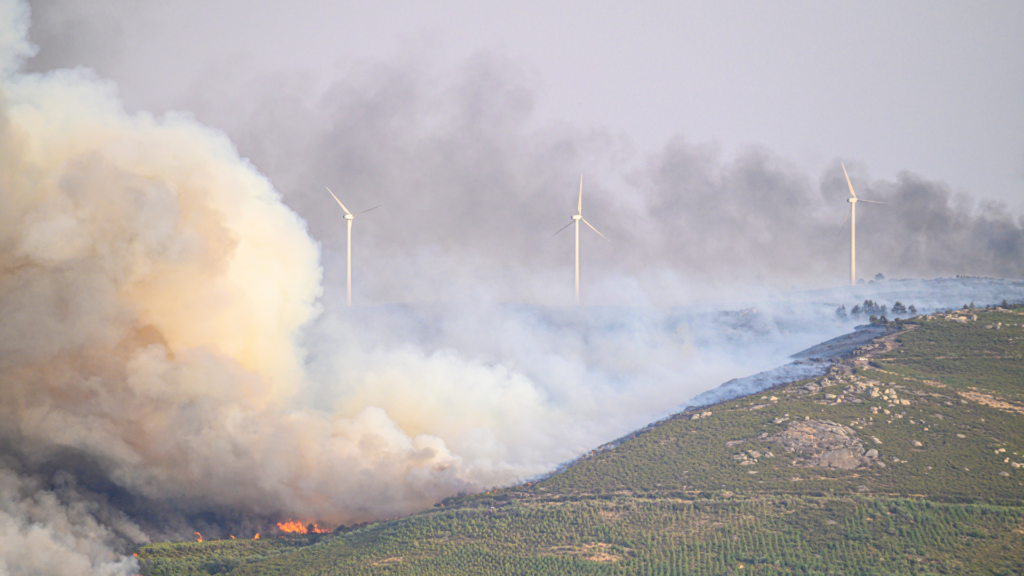
An agricultural community may need to strengthen resilience against drought or changing production conditions. Forest territories may need to consider wildfire risk, ecosystem management and rural livelihoods. Coastal communities may face changing marine ecosystems and pressures affecting small-scale fisheries.
The solutions will not necessarily be identical. However, the processes used to understand challenges, involve stakeholders, test approaches and evaluate results can generate knowledge with relevance beyond an individual Case Study.
In this way, FARCLIMATE contributes not only to developing adaptation solutions but also to understanding how those solutions can work in practice.

From Local Solutions to a More Climate-Resilient Europe
A successful local initiative becomes even more valuable when others can learn from it.
However, replication does not mean copying a solution exactly. Climate conditions, governance structures, available resources and community needs vary considerably between European regions.
Instead, transferability requires understanding why a solution worked, under which conditions and which elements can be adapted elsewhere.
This is one reason why networks such as the EU Mission on Adaptation and platforms such as MIP4Adapt are so important. They create connections between local implementation and European knowledge exchange.
The growing Mission ecosystem provides opportunities for regions to discover practical examples, exchange experiences and build on lessons already learned. MIP4Adapt alone has helped establish an expanding knowledge base of real-world adaptation experiences, alongside guidance and tools designed to support authorities throughout the adaptation process.
FARCLIMATE contributes to this collective learning process by generating experiences across diverse Case Studies and sectors. As these activities progress, understanding what can be replicated, transferred or adapted to other territories will become increasingly important.
Building Resilience from the Ground Up
Europe’s climate adaptation challenge cannot be solved exclusively from Brussels, national capitals or research institutions. Neither can individual communities address it alone.
Effective local climate adaptation depends on connecting these levels.
European strategies can establish ambition and provide resources. The EU Mission on Adaptation can connect regions around common objectives. MIP4Adapt can provide knowledge, tools and opportunities for collaboration. Mission Projects such as FARCLIMATE can then work with communities and stakeholders to explore how adaptation functions under real conditions.
The result is not a single solution to climate change, but a growing European ecosystem of knowledge and experience.
By connecting local realities with European collaboration, FARCLIMATE is helping strengthen this process and supporting the transition from understanding climate risks to taking meaningful action.
Explore FARCLIMATE and discover how our Case Studies, Living Labs and training activitie s are contributing to more climate-resilient communities across Europe.